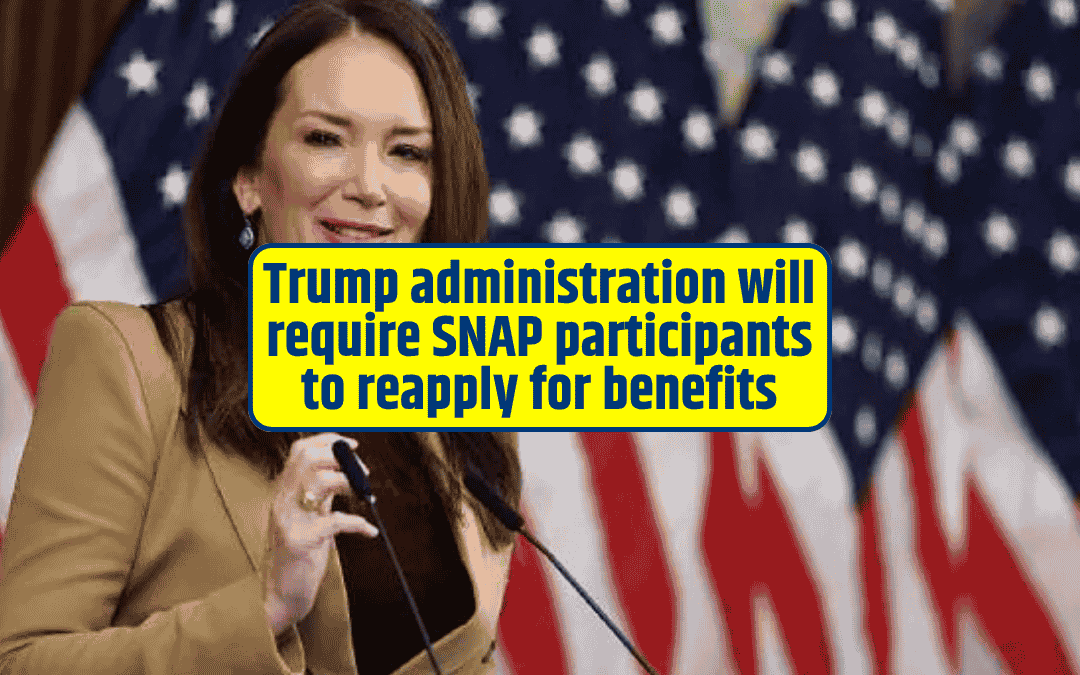
Agriculture Secretary Brooke Rollins announced that the Trump administration will require millions of low-income Americans to reapply for food stamps, framing the move as part of a broader effort to reduce fraud within the Supplemental Nutrition Assistance Program (SNAP).
Speaking to Newsmax on Thursday, Rollins said the goal is to ensure that “everyone that’s taking a taxpayer-funded benefit… literally are vulnerable and can’t survive without it.”
Rollins did not provide specific details on when reapplications would begin or what the new process would involve.
Funding Concerns Intensify During Government Shutdown
The announcement follows controversy after SNAP temporarily ran out of federal funding during the recent government shutdown. The lapse fueled criticism from conservative commentators and President Donald Trump, who argued that the cost of food assistance—about $100 billion in fiscal year 2024—has grown too large.
SNAP currently serves nearly 42 million Americans.
Debate Over the Actual Extent of SNAP Fraud
While the administration cites fraud concerns, anti-hunger advocates argue that the problem is overstated. According to the USDA’s Food and Nutrition Service, fraud includes participants providing false information, retailers trading benefits for cash, or criminals stealing electronic benefits through card skimming.
Advocacy groups emphasize that the average SNAP benefit amounts to only about $6 per day, and that states already require participants to recertify their information as frequently as every six months.
Unclear How New Requirements Differ From Current Rules
The USDA has not yet clarified how Rollins’ proposed reapplication process will differ from existing state procedures. Families receiving SNAP benefits are already responsible for updating work status, income, and other eligibility information.
Rollins has indicated that a broader overhaul of the program will be announced in the coming weeks. She has also directed states to submit sensitive personal data on SNAP recipients—including Social Security numbers—a directive currently facing legal challenges.
Claims of Payments to Deceased Individuals
Rollins stated that data from 29 states suggest that 186,000 deceased individuals are still listed as receiving SNAP benefits. Critics say these numbers require further verification and context.
Major SNAP Cuts Under the One Big Beautiful Bill Act
Federal officials and Republican lawmakers have intensified efforts to curb government spending. The recently passed One Big Beautiful Bill Act, signed in July, imposed a $186 billion cut to SNAP and added new work requirements—the largest overhaul in the program’s history.
Trump Defends Stricter Requirements
In a Fox News appearance Monday, Trump argued that SNAP should serve only those who truly need it. He claimed that the number of beneficiaries is “many times what it should be,” and suggested that some able-bodied individuals leave jobs to receive benefits.
“People that need it have to get it. I’m all for it,” Trump said. “But people who are able-bodied can do a job… That’s not the purpose of it.”
FAQs
What is the purpose of SNAP benefits?
SNAP provides financial assistance to low-income individuals and families to help them purchase nutritious food.
Why is the government requiring people to reapply for SNAP?
The reapplication effort is part of an initiative aimed at verifying eligibility and reducing potential fraud within the program.
How often do SNAP participants usually need to recertify?
In most states, SNAP participants must recertify every six months, though timelines vary based on household circumstances.
How much funding does SNAP receive annually?
SNAP cost roughly $100 billion in the 2024 fiscal year and serves nearly 42 million Americans.
Can able-bodied adults receive SNAP benefits without working?
Some able-bodied adults without dependents must meet work requirements to stay eligible, and recent policy changes have tightened these rules.