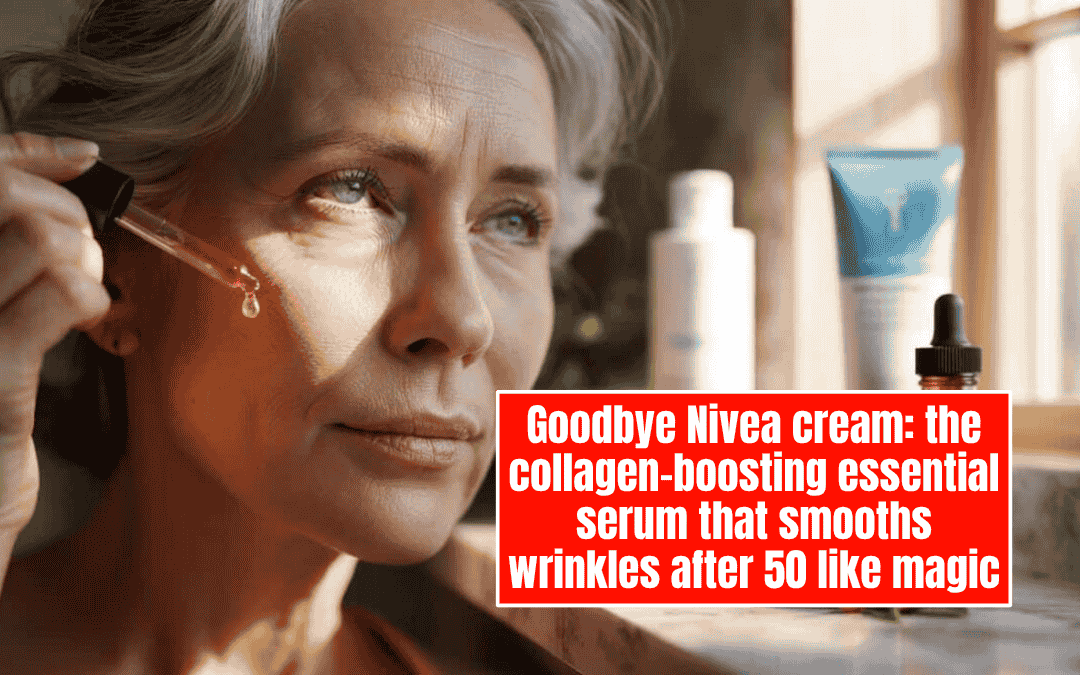
Modern skincare is shedding the clutter. Women increasingly want fewer jars, smarter formulas, and gentler routines that actually deliver. Across UK high street shelves, minimalist serums and plant oils are replacing the heavy cold creams once seen as staples.
The latest buzz? A seed-derived oil celebrated for supporting collagen and softening lines — especially for skin over 50. And it’s winning loyal fans fast.
Why Many Are Rethinking Classic Cold Creams
Cold creams have long been a trusted hydrator, with the iconic blue pot found in countless bathrooms. Yet, some users now find them less compatible with changing skin needs. Complaints of congestion, fragrance sensitivity, or a lingering greasy finish are common.
As skin matures — especially through menopause — dryness and reactivity increase. This shift pushes many toward lighter, layered routines that repair the barrier, maintain hydration, and support collagen without heaviness.
The post-50 skincare goal is simple: calm inflammation, feed the barrier, and gently nudge collagen — without irritation.
Meet the Star Ingredient: Rosehip Seed Oil
The hero of today’s skincare talk is rosehip seed oil, often labeled “rosehip” or “rosa mosqueta.” Unlike what headlines suggest, it’s not an essential oil but a cold-pressed, fixed oil extracted from the seeds of wild rose species such as Rosa canina, Rosa rubiginosa, and Rosa moschata.
Why It’s Creating a Buzz
Rosehip oil is naturally rich in linoleic and alpha-linolenic acids, along with antioxidants like tocopherols and carotenoids. These compounds help strengthen the skin barrier, reduce moisture loss, and revive dull, UV-tired skin.
It also contains trace amounts of trans-retinoic acid — a vitamin A derivative — which may stimulate collagen production and refine texture over time. Importantly, rosehip doesn’t contain collagen itself; rather, it supports the skin’s own collagen pathways.
What Makes Rosehip Different
- Fatty acids: High in linoleic and alpha-linolenic acids to comfort and balance skin.
- Pro-vitamin A: Gentle, naturally derived retinoids refine texture with minimal irritation.
- Antioxidants: Tocopherols and carotenoids help defend against daily oxidative stress.
- Light texture: Absorbs quickly and layers easily under moisturiser and SPF.
How to Use Rosehip Safely, Day and Night
- A few drops are enough — build gradually as your skin adjusts. Keep bottles away from heat and light to prevent oxidation.
- Morning: Apply 2–3 drops to damp skin after serum, before or mixed with moisturiser. Always follow with SPF 30+.
- Evening: Massage 3–4 drops over face and neck after cleansing, sealing with a ceramide or peptide cream if needed.
- If using retinoids: Skip rosehip on those nights to avoid irritation.
- Patch test: Try along the jawline for three nights if you have sensitive or rosacea-prone skin.
- Remember — rosehip enhances your routine; it doesn’t replace sunscreen.
Perfect Pairings for Better Results
Pair rosehip with niacinamide to reduce redness and pigmentation, peptides for firmness, and hyaluronic acid to boost hydration. If you use exfoliating acids, alternate nights to keep things gentle — especially during the first few weeks.
Comparing Rosehip with Other Popular Oils
| Oil | Main Benefits | Skin Feel | Best For |
|---|---|---|---|
| Rosehip Seed | Barrier repair, texture refinement, photo-ageing care | Light, fast-absorbing | Fine lines, uneven tone, combination skin |
| Argan | Softening, shine control, antioxidant support | Silky, mid-weight | Normal to dry skin, dry hair |
| Jojoba | Balances sebum, stable and non-oxidising | Light, wax-like | Oily or sensitive skin |
| Squalane | Weightless hydration, barrier comfort | Ultra-light, non-greasy | All skin types, under makeup |
Do You Need to Ditch Your Moisturiser?
Not necessarily. Many users add rosehip as a booster alongside their existing cream. If your moisturiser feels heavy, try a lighter gel-cream and let rosehip handle the lipid repair. For fragrance sensitivity, choose fragrance-free formulas and let the oil deliver glow and slip naturally.
What to Expect — And When
- 2 weeks: Skin feels softer, makeup sits better, dryness eases.
- 4–6 weeks: Fine lines appear smoother, tone looks more even.
- 3 months: Texture feels firmer, skin appears fresher and more elastic.
Deep lines won’t disappear overnight, but consistent use brings visible renewal.
Who Should Be Careful
- Reactive skin: Introduce slowly, twice a week at first.
- Severe acne: Though high in linoleic acid, it may still trigger breakouts for some — patch test first.
- Allergies: Avoid if allergic to rose family plants.
- On prescription retinoids: Alternate nights and maintain daily SPF protection.
Terminology note: Rosehip seed oil is a pressed carrier oil, not an aromatherapy essential oil.
Sustainability and Sourcing
Quality rosehip oil typically comes from Chile, Argentina, and the Andes region, where it’s cold-pressed — a low-energy extraction method. Transport adds carbon cost, so small bottles and mindful use help reduce waste. Look for organic or COSMOS-certified options for traceable sourcing. Store in amber glass, use within 6–9 months, and keep cool to limit oxidation.
UK Availability and Pricing
Rosehip oil is now mainstream in UK pharmacies and supermarkets, ranging from budget blends to single-origin oils. Unrefined, cold-pressed options retain more nutrients but have an earthy scent. CO₂ extracts are more potent and often pricier. Check that the label lists “Rosa canina seed oil” or “Rosa rubiginosa seed oil” high on the ingredient list for authenticity.
Sample Routine for Skin Over 50
- Morning: Gentle cream cleanser → Niacinamide serum → 2–3 drops rosehip → Lightweight moisturiser → SPF 30–50.
- Evening: Non-stripping cleanser → Peptide or hydrating serum → 3–4 drops rosehip → Ceramide cream.
- Twice weekly: Mild lactic acid exfoliation on non-retinoid nights, if tolerated.
Final Tips for Healthy, Radiant Skin
Pair rosehip with vitamin C in the morning and peptides at night for firmer, glowing skin. Simplify your actives and give each new step at least four weeks to show results.
Because rosehip oxidises quickly, buy small bottles, store tightly capped, and avoid steam exposure. If the scent turns sharp or colour changes, it’s time to replace it — your skin will thank you for the freshness.
FAQs
Is rosehip oil safe for daily use?
Yes, rosehip oil is safe for most skin types and can be used daily. Start with a few drops once a day, then build up gradually to morning and evening use as your skin adjusts.
Can I use rosehip oil with retinol?
It’s best not to layer rosehip oil on the same night as a high-strength retinol. Alternate between them to reduce the chance of irritation while still getting the benefits of both ingredients.
Does rosehip oil replace moisturiser?
Rosehip oil can boost hydration and barrier repair but it doesn’t replace a moisturiser entirely. Use it as a lightweight layer under or mixed with your regular cream.
Is rosehip oil good for mature skin?
Absolutely. Rosehip oil supports collagen, smooths fine lines, and helps restore bounce and radiance to skin over 50 without heaviness.
Can I wear makeup over rosehip oil?
Yes. Rosehip oil absorbs quickly and leaves a smooth base for foundation or tinted moisturiser. Apply a few drops, let it sink in, and then layer makeup as usual.
How should I store rosehip oil?
Keep your bottle in a cool, dark place away from direct sunlight and heat. Always close the cap tightly to prevent oxidation and use within 6–9 months of opening.