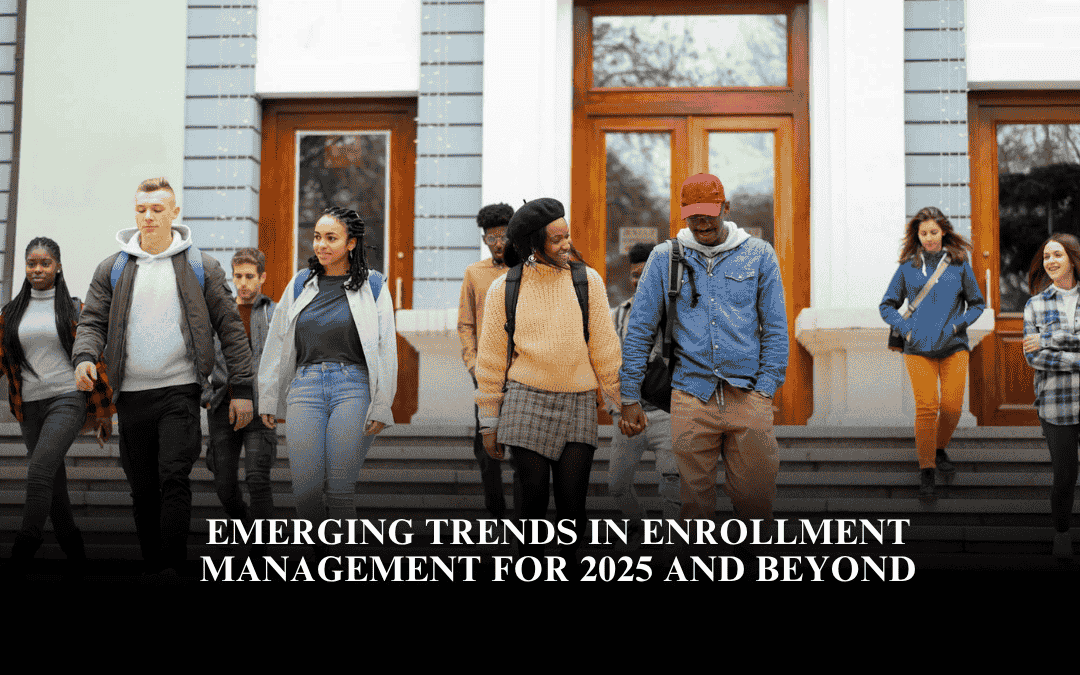
As higher education faces significant transformations, enrollment management strategies are adapting to meet the challenges of shifting demographics, advancing technology, and changing student needs.
Institutions across the United States are refining their recruitment and retention strategies to stay competitive and deliver value in an increasingly complex landscape. Here are some emerging trends that will shape enrollment management in 2025 and beyond.
1. Data-Driven and AI-Powered Recruitment & Retention
The future of enrollment management is closely tied to the use of data analytics and artificial intelligence (AI). Schools are increasingly utilizing predictive analytics and machine learning tools to optimize recruitment efforts, enhance student engagement, and improve retention rates.
By analyzing student behavior, preferences, and academic performance, institutions can target their marketing more effectively, personalize outreach, and identify at-risk students early.
These technologies also help in tailoring financial aid packages and streamlining the application process, making it easier for students to navigate their path to enrollment.
2. Emphasis on Career-Alignment and Return on Investment
Students and their families are becoming more concerned with the return on investment (ROI) of a college education. As the cost of tuition continues to rise, prospective students are looking for clear connections between academic programs and career outcomes.
In response, institutions are focusing on offering career-aligned programs, internships, micro-credentials, and other workforce development opportunities.
Enrollment management teams must emphasize these opportunities when recruiting students, clearly showcasing the career benefits of specific programs and demonstrating how degrees and certifications lead to real-world employment opportunities.
3. Demographic Shifts and Market Diversification
The pool of traditional high school graduates in the U.S. is shrinking, especially in certain regions, prompting institutions to diversify their recruitment strategies.
Enrollment managers are now focusing on non-traditional learners, including adult learners, transfer students, and international students. To meet the needs of these diverse groups, colleges and universities are offering flexible learning options, such as online programs, evening classes, and accelerated degree tracks.
Institutions must also build targeted recruitment efforts to reach underrepresented populations, ensuring that their enrollment strategies reflect the changing face of the student body.
4. Changing Admissions Policies and Holistic Evaluation
Many colleges and universities are moving away from traditional, test-centric admissions policies in favor of more holistic approaches. With standardized test scores being deemed less indicative of student potential, schools are adopting test-optional or test-flexible policies.
Enrollment managers are also considering other factors in the admissions process, such as students’ personal stories, extracurricular activities, and socio-economic backgrounds.
This shift allows for a more inclusive approach to selecting students, ensuring that candidates are evaluated on a broader range of qualities beyond academic scores.
5. Digital Transformation Across the Enrollment Funnel
The integration of digital technology throughout the enrollment process is becoming more critical. Institutions are implementing advanced customer relationship management (CRM) systems, digital marketing strategies, and online application platforms to streamline the recruitment process and provide a seamless experience for prospective students.
Virtual campus tours, online information sessions, and chatbots that provide instant answers to inquiries are becoming common tools in higher education.
As prospective students increasingly conduct their research and application processes online, institutions must ensure that their digital presence is strong and user-friendly.
6. Focus on Retention, Persistence, and Student Success
While attracting students is essential, retaining them has become an equally important focus in enrollment management. With rising tuition costs and a growing emphasis on student success, institutions are aligning recruitment and retention strategies.
Schools are implementing early-warning systems, providing academic and emotional support services, and improving student engagement to ensure students remain enrolled and successfully complete their programs.
Enrollment managers are working more closely with student success teams to create a comprehensive approach that spans the entire student experience, from recruitment to graduation.
FAQs
What major challenge is driving the need for new enrollment strategies?
The major challenge is the decline in traditional high school graduate populations, particularly in certain geographic areas. This shift is leading institutions to diversify their student base, focusing on non-traditional learners and adapting to changing student expectations.
How is AI changing enrollment management practices?
AI and predictive analytics are revolutionizing enrollment management by enabling institutions to target prospective students more effectively, predict student success, and personalize communication. These technologies are also used to streamline administrative processes, making enrollment more efficient.
How should institutions communicate the value of a college education?
Institutions should focus on demonstrating the real-world benefits of their programs, such as job placement rates, average salaries, and skills acquisition. Highlighting career outcomes, internships, and partnerships with employers can help prospective students understand the return on investment for their education.
How can schools address the needs of non-traditional learners?
Schools can better serve non-traditional learners by offering flexible scheduling, online learning options, and accelerated degree programs. Tailored advising and support services, such as career counseling and financial aid guidance, can also help these students succeed.
Is enrollment management now inseparable from student success and retention?
Yes, enrollment management is increasingly integrated with student success and retention efforts. Institutions are recognizing that recruitment is only part of the equation, and ensuring that students are supported throughout their academic journey is crucial to maintaining enrollment numbers and ensuring graduation rates.