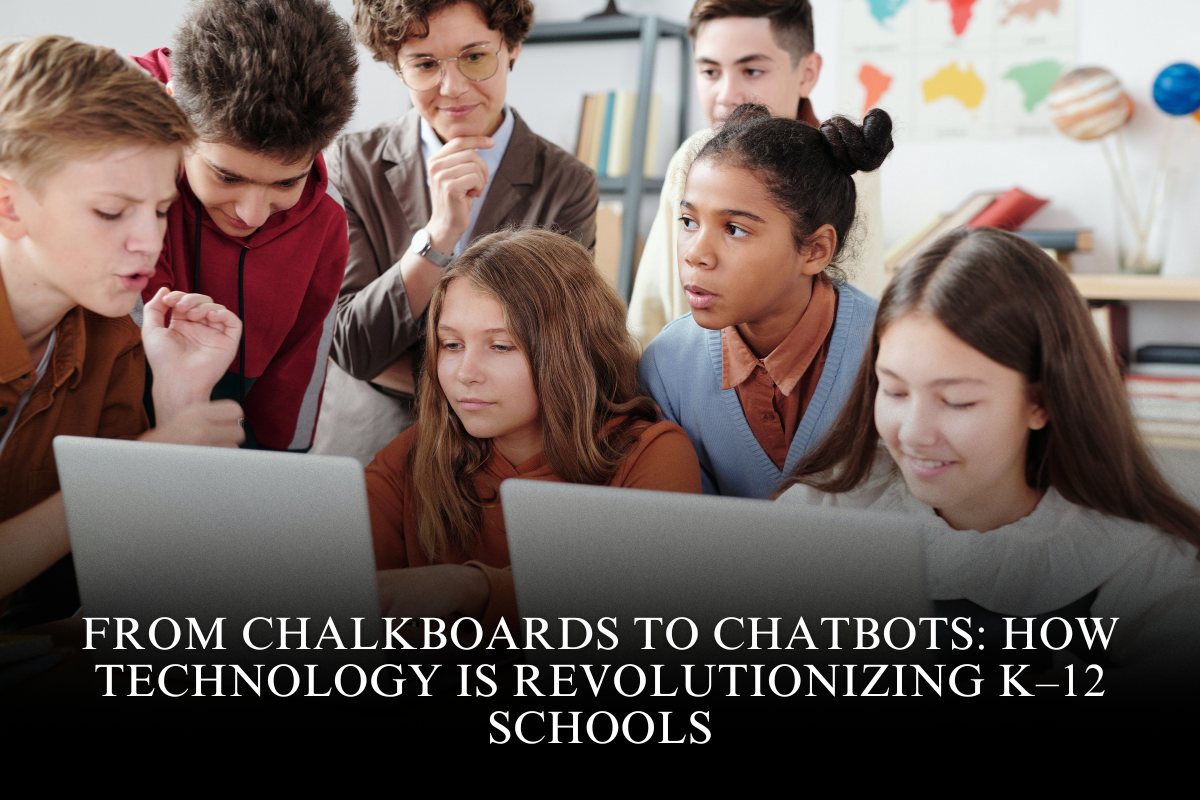
Technology is dramatically transforming K–12 education, replacing the chalkboards of the past with digital tools that personalize learning, enhance engagement, and streamline administration. By 2025, innovations such as artificial intelligence, mobile learning, and immersive experiences are reshaping how students learn and how teachers teach, making education more interactive, accessible, and effective.
Personalized Learning Powered by Artificial Intelligence
One of the most impactful advances is AI-driven personalized learning systems. These platforms analyze each student’s strengths, weaknesses, and pace, dynamically customizing lessons to fit individual needs. AI tools like intelligent tutors and adaptive assessments enable educators to identify learning gaps in real-time and tailor interventions accordingly.
This ensures no student is left behind and motivates greater engagement through lessons that feel relevant and appropriately challenging. AI’s role in personalizing education fosters deeper understanding and improves retention rates across diverse student populations.
Mobility and Blended Learning Environments
The rise of mobile-first learning offers students the flexibility to access educational content anytime and anywhere, further transforming traditional classroom boundaries. Tablets, smartphones, and laptops make learning portable, supporting on-the-go study habits and homework completion.
Meanwhile, blended learning models combine in-person and online instruction, leveraging digital platforms to supplement teaching and provide varied learning modalities. This flexibility empowers students to learn at their own pace while maintaining social interaction and in-person support from teachers.
Immersive and Engaging Technologies: VR, AR, and Gamification
Virtual Reality (VR) and Augmented Reality (AR) integrate immersive, interactive experiences into lessons, making complex subjects like history or science tangible and memorable. For example, students can virtually explore ancient civilizations or delve inside the human anatomy, enhancing engagement and comprehension.
Gamification—adding game elements like points, leaderboards, and challenges to learning activities—stimulates student motivation and fosters a playful, competitive spirit. Platforms such as ClassDojo and educational quizzes utilize gamified mechanics to make routine learning more engaging and fun.
Data Analytics and Streamlined School Operations
Beyond the classroom, education technology improves operational efficiency and decision-making through advanced data analytics. Schools use integrated software systems to track student performance, attendance, and behavior trends, enabling leaders to make data-driven decisions for instruction and resource allocation.
Automated processes simplify administrative tasks, freeing teachers to focus more on teaching and less on paperwork. Additionally, secure cloud-based systems enhance communication between teachers, students, and parents, strengthening community engagement and accountability.
Ethical Innovation and Equity in Technology Use
As technology integrates deeper into education, ethical innovation remains critical. Schools are prioritizing equitable access to devices and internet, ensuring that all students benefit from digital learning regardless of socioeconomic status.
Responsible use of AI and data privacy standards protects student information, while teacher training focuses on integrating technology effectively and ethically. The goal is to foster a digital environment that not only advances learning but also promotes fairness, inclusion, and responsible citizenship.
Frequently Asked Questions (FAQ)
Q: How does AI personalize learning in K–12 education?
A: AI analyzes student data to customize lessons, assess progress, and provide adaptive feedback, helping each student learn at their own pace and style.
Q: What benefits does mobile learning provide?
A: Mobile learning offers flexibility and anytime-anywhere access to educational content, supporting diverse learning habits and supplementing traditional classroom instruction.
Q: How do VR, AR, and gamification enhance student engagement?
A: VR and AR create immersive learning experiences that make abstract concepts tangible, while gamification adds fun and motivation through game-like mechanics and rewards.
Q: How is technology improving school operations?
A: Data analytics streamline decision-making and automate administrative tasks, allowing educators to focus more on teaching and fostering stronger communication with families.
Q: What steps are schools taking to ensure equitable technology use?
A: Schools provide device access, internet connectivity, adhere to privacy standards, and train teachers to use technology responsibly to promote fairness and inclusion.